Sunday, December 21, 2014

End of Semester Holiday Extravaganza!


We are now in the midst of what is commonly called "the Holiday Season" in the U.S. There are several winter holidays celebrated during the months of December and January including Christmas, Hanukkah, Kwanza and New Year's. 

During today's class, we will spend some time talking about each of these celebrations, sharing information about traditional celebrations associated with holidays in the U.S. and Russia and enjoying some fun activities and holiday music! I've included the activity links below. 


Class Links

I. Warm-Up
How are you? How are things? What's new? How was your weekend? What's going on this week? Are you busy? Are you looking forward to the holidays? What will you do? Do you have any questions for me? 

II. Holiday Potluck
Let's enjoy some food during today's class :) Be sure to thank your classmates that were generous enough to bring something to share! 

III. White Elephant Gift Exchange
In order to decide who will go first, we will have a short, improvised "Spelling Bee". In groups of three, you will have 30 seconds to correctly spell the word. The winners will move on. The losers will not. WHO WILL WIN (and get to pick the first gift?!)

IV. Games! 
I hope we can enjoy the last day of class together with a few games including: 
  1. Categories (here)
  2. Find Someone Who... (here)
  3. Hangman 

V. Resources
I hope this is not the end of our time together! I've really enjoyed working with all of you! You've really been one of my all time favorite classes to work with! But, just in case our paths do not cross again, I wanted to leave you with a few links to resources you can consult in the future. They include: 
  1. The American Center - Moscow
  2. American English
  3. "Shaping the Way We Teach English" Webinar Series
  4. Conversation Club/Reading Group (for next semester)

VI. Holiday Activities
If there is some extra time, we can do one or two or the following activities. I was thinking that numbers 1, 3 and 13 would be fun! 
  1. Holiday Discussion Questions
  2. Winter Holiday Presentation 
  3. Holiday Bingo
  4. Holiday Vocabulary
  5. New Year's Reading
  6. Christmas Reading
  7. "Twas the Night Before Christmas" Video
  8. The History of New Year's Video
  9. The History of New Year's Discussion Questions
  10. "The Gift of the Magi" (short story by O. Henry)
  11. "The Gift of the Magi" Discussion Questions
  12. "The Gift of the Magi" video interpretation
  13. New Year's Resolutions
  14. Holiday Music
VII. Final Comments & Certificates
That's it (for now) my friends! Thank you for the opportunity to get to know and work with each one of you. As I mentioned earlier, working with you has been a very positive experience (one of my best). I wish you all the best of luck in your future endeavors. Please stay in touch (via email or in person). I sincerely hope we'll get the chance to work together next semester! 


    Sunday, December 14, 2014

    Looking Back and Looking Ahead


    We're almost at the end and that means I would like to take some time to look back... kind of ironic, I know. You have all proven yourself to be effective communicators in both written and spoken English. Today's class is designed to help you to further increase your accuracy in written communication in English. To do this, we will focus on a common issues that I have noticed popping up repeatedly over the course of the last two months. Hopefully, you'll find this review useful! An outline for today's class can be found below.

    Reflection & Focus on Accuracy

    Objectives: Students will be able to...
    1. explain the importance of accuracy in written communication
    2. engage in some focused practice designed to improve their writing skills in three target areas
    3. explain the importance of reflection to the writing/learning process
    4. engage in personal reflection about their writing and any growth they've noticed in their writing over the course of this semester
    I. Warm-Up 
    How are you? How is everything going? Did you have a nice weekend? How are your other classes going? Are you excited for the end of the semester?!

    II. Final Vocabulary Quiz
    I hope you're ready (insert evil laugh). But wait, there's a surprise...

    III. Homework Review
    Let's take a look at the homework you did on "Critical Thinking"

    IV. Focus on Accuracy Workshop 
    Much of our work these last two months has been focused on developing proficiency. I've wanted you to write as much as possible so I could give you some feedback and you could get used to producing a lot of different writing in preparation for the CAE exam (hopefully, you will also be able to apply some of what we've talked about to your other writing, too). 

    Today, we are going to do some more work focused on developing accuracy. Based on the writing you've done, I want to focus on the following areas: 
    1. Consistently Formal Tone
    2. Promoting Cohesion in Your Writing 
    3. Identifying Countable/Uncountable Nouns 
    4. Proper Article Use
    We'll be using this series of activities. If there is extra time, we will focus on these activities for promoting cohesion in your writing.

    Homework for Next Monday (Our Last Class :(   )
    Course Reflection Assignment: Your final writing assignment is a comprehensive reflection essay designed to help you engage in some critical introspection about the topics we've covered this semester and the ways you've grown as a writer. 

    Get Your "White Elephant" Gift: We're going to do a small gift exchange called "White Elephant". The directions can be found here. Participation is optional, but if you want to participate, you need to bring a small gift. The gift can be 1). something you make, 2). something you already own and want to "re-gift" or something you buy (no more than 200 RUB). Here is a short video overview of how to play! 

    Sign-up to Bring Something for the Potluck: You can do that here. 

    Sunday, December 7, 2014

    Critical Thinking


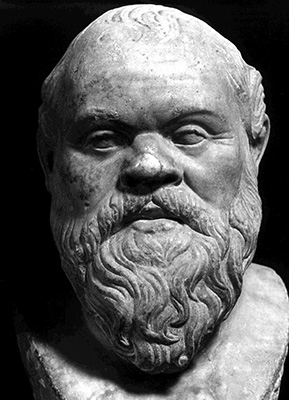
    The ancient greek philosopher Socrates is quoted as saying, "the unexamined life is not worth living". What does that statement mean? You will have a chance to decipher the enigma as part of this week's discussion post. This week, we will be discussing the importance of critical thinking (in general, as part of communication and in writing). An outline for today's class can be found below.

    Critical Thinking

    Objectives: Students will be able to...
    1. Provide a general definition of the term"critical thinking"
    2. Explain and exemplify various terms associated with critical thinking
    3. Explain the importance of thinking critically
    4. Develop a strategy for improving their critical thinking skills
    I. Warm-Up
    How are you? How are things? How was your weekend? What's new? How are your other classes? Are you getting excited for the end of the semester? Any plans? Any questions from this class? 

    II. Vocabulary Quiz
    Any questions? Speak now or forever hold your peace! 

    III. Critical Thinking Discussion
    Using the almighty GROUP RANDOMIZER you will be divided into groups of three. Once in your groups, you will be tasked with discussing the questions about critical thinking found here. After, we will discuss these ideas with a PowerPoint presentation. 

    IV. Critical Thinking Reading
    Now, let's explore the concept a little deeper. We will do this using a "jig-saw" reading activity. The steps for the activity are as follows...

    Step One: You will be given a number between 1-3. Based on your number, you will read one section of an article on critical thinking. The sections can be found below: 
    1. Critical Thinking Reading - Part One
    2. Critical Thinking Reading - Part Two
    3. Critical Thinking Reading - Part Three
    Step Two: You will get into groups of five (everyone with the same number) and discuss what you consider to be the major points of your section using this organizer.

    Step Three: Now you will get into groups of three with one '1', one '2' and one '3'. Each 'topic expert' will present the major points of his/her section to the other group members who will take notes. 

    Step Four: Finally, you will get into new groups of three and come up with answers to the comprehension questions found here. Once everyone has finished, we will discuss the answers as a class. 

    V. Critical Thinking Practice
     Depending on how much time we have left, here are a few (short) activities designed to help develop your critical thinking skills.
    1. Fact or Opinion?
    2. Logical Fallacies: Missing Premise and Hasty Generalizations (practice)


    Homework
    1). Writing a Letter: The writing assignment for this week is a letter. I think the concept of a letter should be pretty familiar to you all by now. Just in case it is not, I have attached an example. There are also some critical thinking questions about how question to approach this assignment. You need to answer these questions as well. Please submit your work by Friday, December 12th, 2014 at 11:55pm. 

    2). Discussion Post: There is a new discussion posting related to critical thinking due by Friday, December 12th, 2014 at 11:55pm. 

    3). Final Vocabulary Quiz of 2014!!!! Oh my goodness! The last quiz! But there's a catch! It's cumulative! So you better start studying now!!! The word list can be found here (among other places). 

    4). Sign-up for the "Holiday Potluck" (last day of class) here. 

    Color Test Results

    Below I've included pictures of your color test masterpieces. Do you remember which picture belongs to which group? Can you tell by looking at the artistic representations of each "color"? While I do agree with the comments made in class about no person being all one color, it was interesting to watch various elements of your primary colors manifest themselves during our class!


    Sunday, November 30, 2014

    Report Writing


    As some of you will remember, we began our discussion of academic writing by writing reports on the environment. Today we will continue our exploration of report writing. An outline for today's class can be found below: 

    Report Writing

    Objectives: Students will be able to...
    1. Identify the basic features of a CAE-style report
    2. Understand and be able to use various formulaic expressions as lexical signposts in their CAE-style report writing
    3. Use this knowledge to produce their own CAE-style report based on a class activity on personality styles 
    I. Warm-Up 
    How was your weekend? How are things in general? Is everything going well in your other classes? Do you have any questions about this class? If people are feeling a little tired (like I was last week) than we can start class with a few more tongue twisters!

    II. Vocabulary Quiz
    "Time to pay the piper!" I hope you studied ;) 

    III. Personality Testing 
    For homework, you will be asked to write a report on the results an experiment we will be conducting in class today. We will conduct the experiment, discuss the results and then review the structural conventions of a CAE-style report. 

    Step One: Brainstorming personality adjectives (both positive and negative). If you need help, check out this list: 

    Step Two: Personality Testing: Which Color Are You? 
    This process has three steps, which are outlined below. Remember: 4 is the Most Like You (3 is kind of like you, 2 isn't really like and 1 is not like you at all). You need to put a number for each option! 
    • Complete the COLOR QUESTIONNAIRE
    • Review and rank (1-4) the "Color DESCRIPTIONS"
      • Review and rank (1-4) the "Color IMAGES"
      Once you finish these three tasks, you need to calculate your high score. You score will indicate which COLOR your personality is :) Once you have this information, we can proceed to Step Three...

      Step Three: Preparing Personality Presentations (to be explained in class) 

      Step Four: Delivering Personality Presentations (self-explanatory :)   )

      Step Five: Reviewing the Results (in-class discussion... I will link the materials after we've talked about them together). 

      --------> Materials from the COLOR TEST
      1. Colors and Personality Results PPT
      2. Personality Colors Article


      IV. CAE Report Structure
      To begin, discuss these questions with a partner. Then, we'll discuss them as a class. Finally, we will review a basic outline of the structure of a CAE-style report (as well as a few useful phrases). 

      Homework 
      1). Prepare for a vocabulary quiz on these words 
      2). Write a report based on our in-class activity. Use these guidelines. I will send each one of you a Google Doc to write your response in. Your response is due by Friday, December 5th at 11:55pm. 
      3). Prepare a discuss post response to this prompt by Friday, December 5th at 11:55pm. 
      4). Start thinking about what you'll bring to our "End of the Semester Holiday Potluck Extravaganza" on the last day of class (Monday, December 22nd, 2014). 

      Thursday, November 27, 2014

      Happy Thanksgiving!


      Today people are celebrating Thanksgiving all across the U.S. So what is Thanksgiving? The first link below takes you to a reading explores this American tradition. It also includes a glossary with lots of related vocabulary related to the holiday and the music and lyrics for a traditional Thanksgiving song! I've also included a link to "A Charlie Brown Thanksgiving" (yet another Charlie Brown video that takes a fun look at unique American traditions). Happy Thanksgiving!

      Sunday, November 23, 2014

      Writing Reviews


      Today we will be talking about how to write reviews. As with all writing, developing skill in this particular genre requires patience, practice and awareness about the expectations placed on the writer by the audience and fellow reviewers. Bonus points to any one who can name the two gentlemen in the picture above!

      An outline for today's class can be found below...

      Review Writing

      Objectives: Students will be able to...

      1. Explain several features common to all forms of review writing
      2. Explain common differences between reviews
      3. Demonstrate understanding of the structure of a movie and/or book review
      4. Use key vocabulary in describing the features of a story
      5. Write a short review of their own


      I. Warm-Up 
      How are you? How was your weekend? How are things going in your other classes? Any questions about anything from this class?

      II. Vocabulary Quiz
      I hope you studied!

      III. Housekeeping Details and Homework Review
      Including the returning of the previous week's vocabulary quiz and reviewing the homework (done in pairs) on academic style.

      IV. Writing Reviews
      To begin, read this review of "The Dark Knight Rises", the third and final chapter of the most recent Batman trilogy. After you read the review, find a partner and discuss these questions:
      1. What kind of writing is review writing? Description? Analysis? Persuasion? Essay writing? 
      2. What is the purpose? Who is the audience? 
      3. What kind of information is included in the review? 
      4. What are the different sections/parts of the review?
      5. How would you describe the language of a review?
      After we've had a chance to discuss these questions as a whole group, we will review the information found in this short presentation. I will also provide you with a handout that outlines important information on the kind of language necessary to use in your review.

      *CAE Tips*
      In order to write a good review on the CAE exam, remember that...
      1. Keep the content of your review relevant 
      2. Be sure to completely answer the question (or questions)
      3. Strive to express yourself clearly
      4. Follow a clear pattern of organization (Hook -> Summary -> Pros/Cons -> Final Recommendation)
      5. Have fun! Take some chances, use some descriptive expressions, show enthusiasm (lack thereof). Remember, a review is your opinion of something, so don't be afraid to express yourself. 
      V. Example Reviews
      Below you will find a few example reviews. Take a look and analyze them carefully for 1). similarities and differences (based on the subject matter) and 2). interesting linguistic conventions, phrases and/or expressions. (These websites (and more) can also be found inside the 

      Music Reviews: Pitchfork
      Movie Reviews: Rotten Tomatoes
      Restaurant Reviews: Zagat
      Travel Stops: Trip Advisor

      VI. Practice
      Now, let's do a little practice in class. We will watch a short film called "Alma". The Spanish speakers in class can provide the translation of that. It is written and directed by Rodrigo Blaas and came out in 2011. 

      As we watch, be sure to take notes. After, I will put you into groups of three and you will work together to write a short review of the film. Remember the steps...
      1. Hook
      2. Synopsis
      3. Pros/Cons
      4. Recommendation
      If there is time, I will ask for volunteers to share their reviews. If not, I will collect them and give you feedback for next week. 

      Homework for Monday, December 1st, 2014
      1). Prepare for a new vocabulary quiz on these words
      2). Post to the discussion board for this week. The directions have changed so be sure to note the changes. As always, you posts are due by 11:55pm on Friday night (Nov. 28th). 
      3). Write a review of the short animated film "Alma" by Rodrigo Blaas. I've sent you a link via Google Drive. Due to some confusion, you have until Sunday, November 30th at 11:55 pm to finish your review. Thanks! 

      Sunday, November 16, 2014

      Academic Style


      For a long time, the book pictured above, "The Elements of of Style" by Strunk and White was considered to be the Bible for native English speakers writing for academic purposes. A summary of the most important lessons from the book can be found here. If you are interested in getting the entire original version, check Amazon. 

      As you may have guessed, we will be talking about academic style in class today. An outline for today's class can be found below...

      Academic Style 

      Objectives: Students will be able to...
      1. Understand and explain the different between formal and informal style
      2. Understand and use different techniques designed to make their writing more formal
      3. Apply the lessons learned in class to their out of class writing


      I. Warm-Up
      How was your weekend? Anyone do anything fun? How are your other classes going? Does anyone have questions for this class? 

      In an effort to get everyone interested and talkative, let's try a couple more tongue twisters: 
      1. Father, mother, sister, brother -hand in hand with one another.
      2. Three thin thieves thought a thousand thoughts. Now if three thin thieves thought a thousand thoughts how many thoughts did each thief think?
      3. The thirty-three thankful thieves thought that they thanked the other thirty-three thankful thieves throughout Thursday.

      II. Vocabulary Quiz
      I hope you studied! 

      III. CAE Analysis Warm-Up 
      Each week, I give each of you individual feedback on your homework assignments for class. But, since, "two heads are better than one" (and there are 16 of us in the room for each class), I want to practice making an outline for this example CAE question. 

      First, brainstorm your outline (and answers to the questions) within a small group. Then we will discuss the strategies together as a class. Be sure to take notes!

      IV. Overview of Academic Style
      This presentation gives a brief overview of several tips and techniques designed to help you write more formally. As we go through the presentation, be sure to take notes. After the presentation, you will be given a summary of the information (to complete your notes) and we will do a brief "Academic Style Workshop" using these activities. 

      V. Mini-Presentations on Academic Style
      If there is time, the class will be divided into four groups. Each group will be responsible for creating and presenting a short presentation on one of the "tips" listed in the presentation (and presentation notes). Groups will be determined randomly using the all-powerful group randomizer
      1. Group 1 -> Using Formal Language
      2. Group 2 -> Being Concise and Precise
      3. Group 3 -> Using Impersonal Language
      4. Group 4 -> Being Cautious
      Homework for Next Monday (November 24th, 2014)
      1). Attend the WEBCHAT FOR ENGLISH LANGUAGE LEARNERS
      In celebration of International Education Week, the Office of English Language Programs will be having a webchat for English language learners on November 20th at 8:00 a.m. EST (16:00 Moscow time). In the webchat “Learn English with US! 15 Fun Tips from American English,” we will share 15 different approaches to learning English.

      Instructions for learners to join: 1) Go to http://bit.ly/learnAE 2) Select "Enter as guest.” 3) Type your first name + country (example: Jenny USA)

      -----> After you attend the webchat, write a short summary of what was discussed (250-300 words). Do this in your reflection GoogleDoc by Friday, Nov. 21st at 11:55pm.

      OR

      Write a 250-300 word summary of one of the articles from "Forum" magazine. 

      2). Prepare for another vocabulary quiz with these words
      3). Respond to the new discussion board topic. Same rules apply as always: one post, one response. Please make sure to complete this by Friday, Nov. 14, 2014 at 11:55pm.

      Coherence & Cohesion Presentations

      Last week, you guys spent some time creating and giving presentations on the very complex topic of coherence and cohesion in academic writing. I just wanted to share your work! Nice job!


      Tuesday, November 11, 2014

      Upcoming Opportunities to Practice English


      Opportunity #1: WEBCHAT FOR ENGLISH LANGUAGE LEARNERS
      In celebration of International Education Week, the Office of English Language Programs will be having a webchat for English language learners on November 20th at 8:00 a.m. EST (16:00 Moscow time). In the webchat “Learn English with US! 15 Fun Tips from American English,” we will share 15 different approaches to learning English.

      Instructions for learners to join: 1) Go to http://bit.ly/learnAE 2) Select "Enter as guest.” 3) Type your first name + country (example: Jenny USA)

      FACEBOOK
      Are you a learner looking for tips on how to learn English? Participate in our webchat (“Learn English with US! 15 Fun Tips from American English”) during International Education Week! On Thursday, November 20th at 8:00 a.m. EST (16:00 Moscow time), we will share 15 different approaches to learning English. Join us! #AmericanEnglish #IEW2014 To join: Go to http://bit.ly/learnAE. Select "Enter as guest.” Type your first name + country (example: Jenny USA)

      TWITTER
      Learning English? Join “Learn English with US! 15 Fun Tips from #American English” webchat Nov. 20th 8am EST (16:00 Moscow time) http://bit.ly/learnAE #IEW2014


      Opportunity #2: New MOOC: Principles of Written English, Part 2 
      The English Language Office at the U.S. Embassy in Moscow is pleased to announce that part two of the popular MOOC (Massively Open Online Course) , “Principles of Written English” will begin on February 4, 2015. In this second part of the academic writing course, participants will focus on proofreading and self-editing, revision vs. editing, common errors in grammar, punctuation, and spelling, understanding tone and diction, and vocabulary development. The course materials will be offered via readings, videos, and various types of homework assignments. There are also suggested optional textbooks for additional writing work. Participants will take part in online discussions as well as peer review of their writing. As a part of this course, students will be expected to complete one full essay. For those that were not able to participate in part one of the courses there is no need to worry. While all three sections in this series are complimentary, each section can be taken as a “stand-alone” course.

      For more information, please consult this document. If you have any questions, don't hesitate to ask!

      Sunday, November 9, 2014

      The Five Paragraph Essay


      Welcome back to Foundations of Academic Writing! What better way to start off your week than with a critical, engrossing and fun discussion of the characteristics of effective academic writing in English. I hope everyone had a nice weekend and enjoyable holiday break last week. 

      Today we are going to turn our attention to a discussion of one of the most common forms of academic writing: the five paragraph essay. An outline for today's class can be found below....

      The Five Paragraph Academic Essay

      Objectives: Students will be able to...
      1. Identify and explain the importance of the major components of a five paragraph essay
      2. Identify and explain the importance of thesis statement
      3. Explain how the five paragraph essay structure is used to promote "coherence" and "cohesion" in academic writing. 
      4. Explain how this structure can be used to help them write more effectively for the CAE exam
      I. Warm-Up
      How was the weekend? Did anyone do anything fun over the weekend (or the holiday break)? How are your other classes going? Any questions about this class? 

      II. Vocabulary Quiz
      It's time to "face the music"! I hope you studied! 

      III. Five Paragraph Essay Structure
      To begin, you will have a chance to show what you know about five paragraph essay structure. With a partner, complete this activity that asks you to identify and define the major parts of a five paragraph essay.

      After you've a had a chance to try and identify each part of the essay, we will discuss the answers as a class using two presentations (found below)...

      1. EAP Introductions & Conclusions
      2. EAP Body Paragraphs

      IV. Coherence & Cohesion

      Your reflection question from last week asked you to talk about "coherence" and "cohesion", two very important characteristics of effective writing. Now, it's time for you to demonstrate your understanding of these two rather complex topics.

      In small groups (3 or 4) decided by the "Group Randomizer", you will come up with a short (1-2 min) presentation that defines both "coherence" and "cohesion", with examples, and explains how the two concepts are different. You will also be asked to create a visual aid.

      V. Application: CAE Exam
      It is important that the skills we are discussing in class apply to helping you do well on your CAE exam, so let's starting developing a procedure for doing well on the writing section of the exam. We will do so using this guide. We will make additions to it throughout the course of the semester, so be sure to check for updates.

      Homework for Next Monday (11/17/2014)
      1). Prepare for another vocabulary quiz with these words
      2). Respond to the new discussion board topic. Same rules apply as always: one post, one response. Please make sure to complete this by Friday, Nov. 14, 2014 at 11:55pm.
      3). CAE Practice (Essay Writing): Write a 220-260 word response to the prompt which I will email to you. There are a few things I'd like you to do when answering:
                 -Restrict yourself to 45 minutes
                 -Share your answer with me directly via the GoogleDoc.
                 -Submit your response by Friday, Nov. 14, 2014 at 11:55pm

      Monday, November 3, 2014

      Holiday Break Update


      I hope this post finds everyone well, rested and enjoying the end of the holiday break. I'm curious as to how many of you went "trick or treating" last Friday, but I guess I will have to wait until next Monday to find out! 

      As I promised last week, here is an update with the homework. Please let me know if you have any questions. You will notice that the word count for the reflections has gone up from 100-150 to 150-200 words. Please follow this guideline in order to ensure full credit. 

      The homework is as follows...
      1. I have just finished posting the new reflection prompts. Please be sure to respond to them by Friday, Nov. 7th at 11:55pm. 
      2. I also posted a new discussion board topic. Same rules as always apply: one post, one response, by Friday, Nov. 7th at 11:55pm. 
      3. Don't forget to review the vocabulary words for the quiz next Monday.
      Below, I've included pictures of the classes' conceptualizations of the communication model. Which is your favorite? 


      Thursday, October 30, 2014

      Happy Halloween!


      Hi all. I hope this post finds you well. I just wanted to share a bit about Halloween! On Friday, October 31st, 2014, people all of the U.S. will celebrate Halloween. But what is Halloween? What are its origins? How do people celebrate it? What are the popular costumes this year? 

      Below, I've included a few links below to help you answer all your "Halloween 2014"-related questions. Enjoy and have a "Spook-tacular Halloween"! 
      1. The Origins of Halloween
      2. Classic Halloween Costumes
      3. Charlie Brown & The Great Pumpkin
      4. A Few "Classic" Halloween Jokes
      5. Halloween Music: Rihanna "Disturbia" and "Boris" Pickett "Monster Mash"

      BONUS!  Since it's Halloween, here are some obligatory, embarrassing pictures of your teacher in his last Halloween costume. I went as a Zombie teacher! My friends went as other members of a fictional Zombie High School. Enjoy :) 


      Sunday, October 26, 2014

      Day Two: Intercultural Communication, Audience and Purpose


      Welcome back! I hope everyone had a nice weekend and is ready to re-engage in our ongoing discussion of the Foundations of Academic Writing. Today we are going to discuss a few foundational considerations: the degree to which culture influences our communication as well as the importance of understanding who we're writing for (our audience) and why we're writing (our purpose). An outline for today's class can be found below: 

      Day Two: Intercultural Communication, Audience & Purpose

      Objectives: Students will be able to...
      1. Understand and explain the role that culture plays in influencing the way we communicate
      2. Understand and explain the importance of audience and purpose in the writing process
      I. Warm-Up
      What did you do over the weekend?

      II. Writing Review
      We will begin class by reviewing the writing you did for last week. This will include: 
      • Reviewing the discussion forum
      • Comments on the "Reflection Journals"
      • General & specific feedback on the Diagnostic Essay activity

      III. Culture & Communication
      With a partner, take five minutes and discuss the following questions. You can write your answers or have a free discussion, but be prepared to share with the class. 
      1. What is "culture"? Give an example.
      2. What role does "culture" play within a society? 
      3. How does culture influence the way we communicate? 
      We will discuss the answers to these questions as a class and then we will review this short presentation. Finally, you will find a new partner and discuss the answers to these questions. Once again, you will have five minutes and you will be expected to be prepared to share your thoughts with the class.

      IV. The Communication Model
      Now, a couple of general questions for the class: 
      • How does communication work? 
      • If you had to draw a picture of the way that communication works, what would it look like? 
      Now, let's take a look at this short video from teacher Krista Price about the way communication actually works. As you watch, consider the answers to these. When the video finishes, you'll have a chance to discuss the answers with a new partner. After that, we'll see if it's necessary to watch the video one more time. If so, we will. If not, we'll discuss!

      V. Audience & Purpose
      Finally, we will discuss a little bit about the concept of audience and purpose and the roles they play in your writing using this worksheet and focusing on the following questions: 
      1. When communicating, who is the "audience"? Can there be more than one? Explain.
      2. When communicating, what is the "purpose"? Can there be more than one? Explain. 
      3. Why is it important to have a clear idea of who your audience is and what your purpose is? 
      Homework
      For next class, please be sure to do the following assignments: 
      • Prepare a response in your reflection journal
      • Post an answer to the "Week Two: Forum Discussion" and respond to one of your classmates' posts
      • Prepare for a short academic vocabulary quiz 

      Sunday, October 19, 2014

      Day One: Introductions, Class Policy and the Diagnostic Essay


      Welcome to "Foundations of Academic Writing". I know everyone has been anxiously awaiting our first class, so let's begin. An outline for our time together can be found below...

      Day One: Introductions and the Diagnostic
      I. Instructor Introduction
      Since we will be spending the next few months working together, I think it is only appropriate that I properly introduce myself. I will do so with the help of this short presentation.

      II. Introducing Yourself 
      Now, you will have a chance to introduce yourself. I think many of you already know one another, but I don't know anyone yet. Please follow this procedure:

      1. Get into groups of three people
      2. Introduce yourself using the questions found here
      3. Listen and take notes as your partners introduce themselves
      4. Be prepared to introduce another member of your group 

      III. Introduction to the Class & Website

      Now that we all know one another, let's take some time to get go over the class schedule and goals. Also, I would like to explain how the course website works and how to best take advantage of it!

      IV. Culture and Communication
      Does culture influence communication? If yes, how so? If no, why not? We'll begin with a short discussion about the elements of culture and move on to a presentation that outlines they different way that our culture effects the way we communicate with one another.

      V. Diagnostic Essay
      Now I would like to get to know your writing! The last part of today's class will be dedicated to a diagnostic essay. This is a way for me to get an idea of the way you write right now (at the beginning of class) and how we can best focus the rest of our time together.

      The prompt (based of a CAE "report"-style question) can be found here.

      Follow the directions, do your best and remember: this isn't for a grade!

      Homework
      1). Add a response to the group discussion board for week one AND respond to one of your classmates' posts (by Friday at 11:55pm)
      2). Write your response in your reflective journal for week one (by Friday at 11:55pm)
      3). Buy and bring a folder to use to store your portfolio work (by next class). 


      Welcome to Foundations of Academic Writing!


      Welcome to Foundations of Academic Writing (FAW). My name is John Kotnarowski and I will be your instructor and guide this semester as we take a deeper look into the basic skills necessary to write effectively in academic English. Specifically, we will focus on essay organization and structure, academic style and tone and ways to make your writing as clear and effective as possible. I look forward to meeting everyone and getting off to a great start this semester.

      A bit about the course website. This is where I'll be posting outlines and links for every class meeting. It is intended to be used as a virtual supplement to our in-class discussions and assignments. To the right, you will find important class information under the "Class Links" list. Just below, you'll find another link list titled, "Helpful Websites". I encourage to take a look at these helpful resources as we make our way through the semester. Hopefully, you'll find them useful in your own writing.

      Please feel free to send me an email whenever you need to get in touch. My email address is: jk.esl.uiuc@gmail.com. I'm excited for what should be an engaging and informative semester for everyone involved.